Abisko village
Aurora can be visible directly from the village. Move away from individual outdoor lights while staying on established access.
No car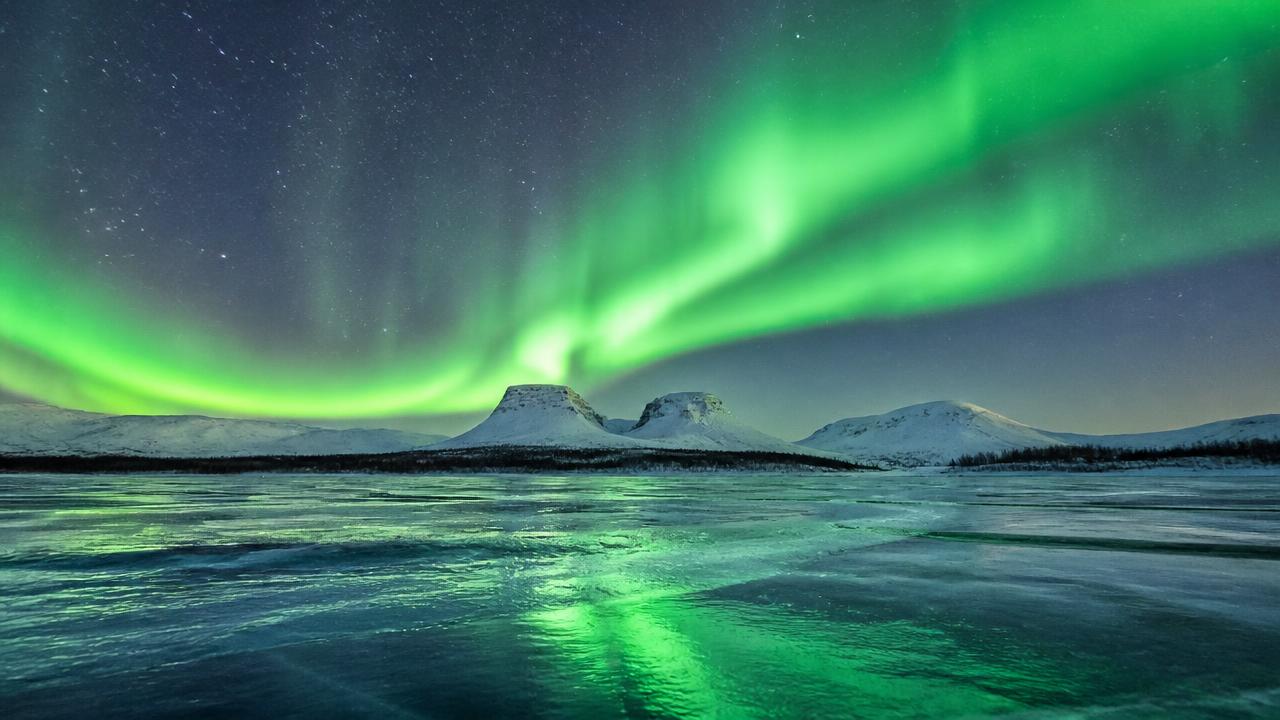
68° north · Swedish Lapland · Sweden
Abisko is one of Sweden's best-known destinations for seeing the Northern Lights.
Located in Swedish Lapland, around 200 kilometres north of the Arctic Circle, Abisko combines dark Arctic skies, very little artificial light and a mountain setting known for producing periods of clear weather even when surrounding areas are cloudy.
The season generally runs from September until late March. But even here, the lights are never guaranteed: you still need darkness, sufficiently clear sky and aurora activity.
Below you can compare local experiences, check tonight's forecast and find practical, Abisko-specific advice.
Starting location matters
Abisko has specialised photography, small-group, snowshoe and vehicle-based experiences. Each card shows where the tour starts — Abisko, nearby Björkliden, or Kiruna (about 1.5 hours away by road).
Verified operators in this category will appear here when partner information is added.
Prices shown are regular prices; check availability for your dates when booking. Aurora Sky Station is treated separately below rather than mixed into this operator list.
Northern Lights season
September – late March
Location
Around 200 km north of the Arctic Circle
Can you see them without a tour?
Yes
Do you need a car?
No
Do you need a high KP index?
No
Main advantage
Dark skies and favourable local cloud conditions
Main challenge
Weather can still block the sky
Best strategy
Stay several nights and use every clear opportunity
Live conditions
A useful forecast combines aurora activity, cloud cover, darkness and local weather. Thick cloud can hide active aurora, even in Abisko.
View detailed Abisko aurora forecastAbisko lies far north beneath the auroral oval. You do not need an extreme KP forecast to have a chance of seeing the Northern Lights.
The Blue Hole describes the tendency for clearer sky to occur around Abisko even when clouds affect surrounding mountain areas. Local topography plays an important role: moist air crossing the mountains can lose moisture before reaching Abisko, sometimes leaving a clearer opening.
This local weather advantage is one reason Abisko has such a strong aurora reputation.
Abisko can still be cloudy. Snowfall, low cloud and poor visibility occur, and clear sky does not guarantee strong aurora.
Do not assume a cloudy forecast for the wider Kiruna region means Abisko has identical conditions. Local cloud cover can differ.
Abisko's latitude gives frequent aurora opportunities during the dark season without requiring a major geomagnetic storm.
The settlement is small and surrounded by wilderness, so you do not need to travel far simply to escape urban light pollution.
Surrounding mountains can create local differences in cloud cover, while Torneträsk and the national park provide broad, dark views.
The season generally runs from September until late March. Aurora occurs year-round, but bright Arctic summer nights prevent it from being visible.
September & October
Dark nights return while the landscape transitions from autumn towards winter. October is a transition month and some tourism facilities may have reduced availability.
November & December
Nights become extremely long. Around the darkest part of winter, the sun remains below the horizon for an extended period—but darkness alone does not guarantee aurora.
January & February
Classic winter conditions with long nights, deep cold and snow-covered landscapes.
March
Winter scenery remains while daylight increases quickly. Nights are still sufficiently dark for Northern Lights viewing.
No single month guarantees a display. Darkness, clear sky, aurora activity and enough nights matter more than finding one perfect date.
September offers aurora before deep winter. December and January have extremely long darkness. February brings classic winter conditions, while March pairs snow with considerably more daylight.
There is no fixed schedule. Displays can occur whenever the sky is sufficiently dark and conditions are favourable, from evening into the early morning.
Yes. When conditions are right, aurora can be visible directly from the village and surrounding areas. Moving away from bright individual lights improves weaker displays.
There is no single best location. Choose according to cloud, viewing direction, wind, snow and safe access. Exact pins will only be added after nighttime access, trail and ice safety are verified.
Aurora can be visible directly from the village. Move away from individual outdoor lights while staying on established access.
No carA convenient starting point for visitors arriving without a car, with darker surroundings close to visitor facilities.
Easy accessDark Arctic surroundings begin very close to the tourist station. Stay on known routes and do not treat the park like an urban viewpoint.
National parkThe enormous lake creates open sky views closely associated with Abisko's aurora landscape. Use established, safe access areas.
LakeAn elevated experience with broad views. Access depends on current weather, operating conditions and lift availability.
Elevated viewAbisko is particularly suitable for independent viewing. Dark surroundings are close, and you can often begin simply by stepping outside.
A guide can add local weather knowledge, transportation, photography help, equipment and different viewing environments.
Check whether the experience starts in Abisko, Kiruna or Björkliden. A tour marketed around Abisko may include a journey from elsewhere.
Some tours travel for clearer sky; others use Abisko's local conditions and remain nearby. Confirm which approach you are booking.
Check the actual maximum number of guests.
Confirm whether instruction, tripods, cameras, guide photos or guest photographs are included.
Check whether thermal overalls, winter boots or other equipment are provided.
Compare the typical duration and whether return time can change with conditions.
Confirm the exact meeting point and whether return transport is included.
These are different experiences—not competing guarantees.
An elevated fixed location on Nuolja with broad views. Operation depends on weather and lift conditions.
Guidance and, depending on the operator, mobility to search for clearer sky.
Freedom and simplicity in dark surroundings accessible directly from Abisko.
Abisko can become extremely cold, and aurora watching involves standing still outside for long periods.
Even in Abisko, avoid relying on one night. Three to four nights provides useful flexibility for clear sky and aurora activity to coincide.
No. Aurora can be visible around the village, tourist station and other accessible areas. Abisko is also served by train on the railway between Kiruna and Narvik.
Train + accommodation + walking + optional tour can be enough for a Northern Lights-focused stay.
Extreme cold, deep snow, ice, strong wind, mountain weather and limited visibility require care.
Its proximity to visitor facilities can make the landscape feel easier than it is. Weather changes quickly and coverage can be limited. You do not need to hike deep into the park to find dark skies.
No. The Blue Hole does not guarantee clear skies, and clear skies do not guarantee strong aurora.
Stay several nights. Watch the local cloud forecast. Use every clear opportunity.
Practical answers
Give yourself several nights. Check local cloud conditions. Use every clear opportunity. Sometimes the best strategy is simply to step outside and look up.