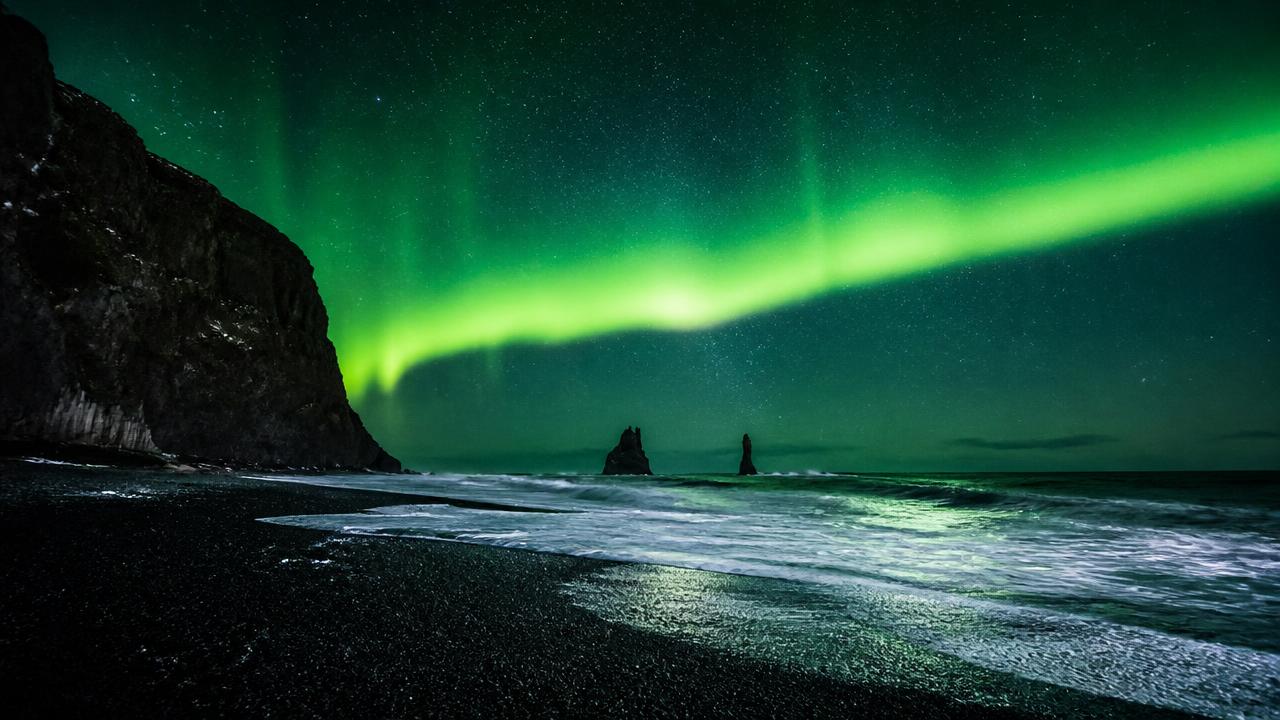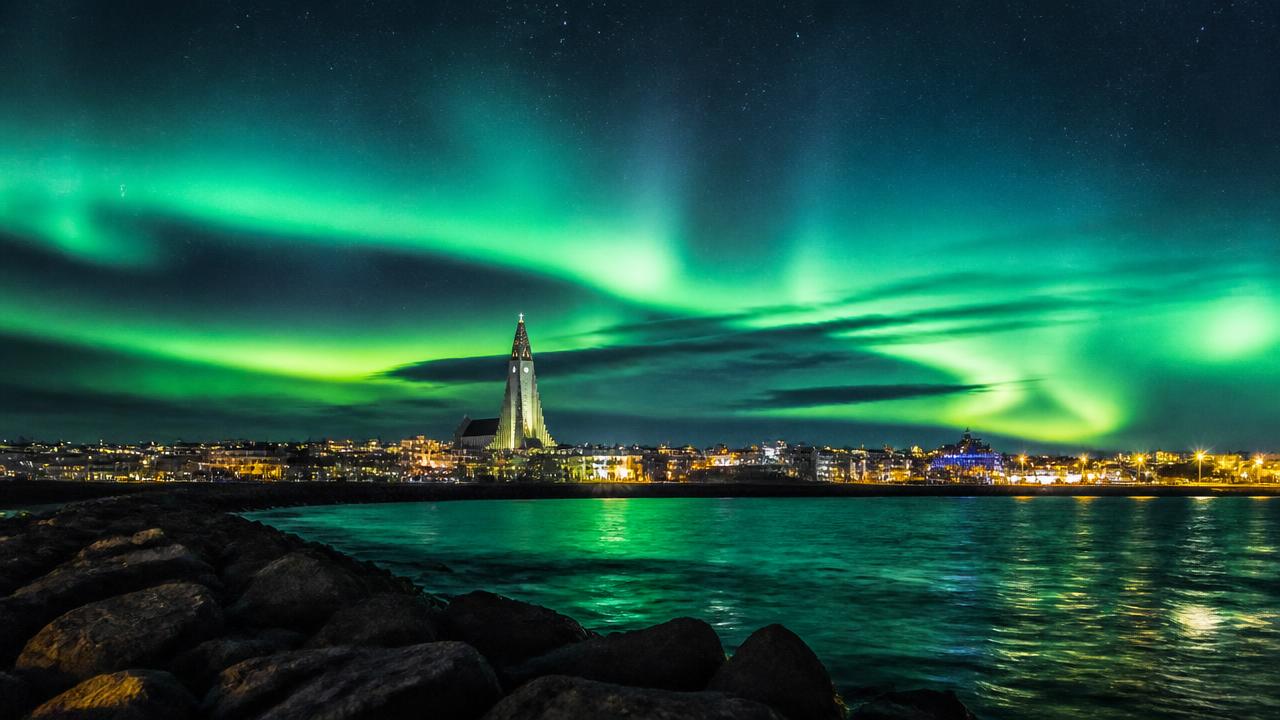
Northern lights above Icelandic coast and Reykjavík

Country-wide viewing · Cloud-first planning

Northern Lights in Iceland: Where, When and How to See the Aurora

Iceland is one of the world’s most popular Northern Lights destinations.

From late August until April, aurora can appear above cities, black sand, mountains, fjords, lava and remote coasts.

But the darkest or most famous place is not automatically useful. A celebrated location beneath thick cloud shows nothing; a simple landscape beneath clear sky can be excellent.

This guide helps you choose where, when and how to look—by following conditions, not reputation.

Where is the clear sky?

Where can you see the Northern Lights in Iceland?

Aurora can appear throughout Iceland when darkness, clear enough sky and activity cooperate. The practical question is usually not where aurora exists, but where you can see the sky tonight.

Interactive Iceland explorer

Choose by conditions and trip style

City · Very large tour market

Reykjavík

Iceland’s main aurora base offers road chases, boat tours and easy access from city services to darker outskirts.

Select 2–4 to compare

Reykjavík and Vík have complete guides. Akureyri is the next priority; regions remain planning choices.

Primary destinations

The main Northern Lights destinations in Iceland

Reykjavík and Vík already have complete guides. Akureyri is the strongest next pillar because it adds a distinct North Iceland city base.

Northern lights in Reykjavík

City + tours + chase

Reykjavík

Accessibility and Iceland’s largest tour market

Choose road chases, bus and minibus tours, private and photography options or boat tours without renting a car.

  • Very large tour choice
  • Excellent without a car
  • Road and boat options
Northern lights in Vík

South Coast + road trip

Vík

Darkness begins almost outside the village

A small base for independent viewing amid coast, mountains and black-sand landscapes—when South Coast skies cooperate.

  • Smaller tour market
  • A car is useful
  • Cloud and safe access matter

Next destination guide

Akureyri

Small city + North Iceland

City convenience with fjords, valleys and dark nature close to town. It provides a meaningful alternative to both Reykjavík and Vík.

  • Good tour market
  • Works without a car
  • Fjord and mountain landscapes

Guide planned next

Regional choices

More Northern Lights regions in Iceland

Iceland suits regional exploration. These are useful weather and road-trip zones—not automatic reasons to create overlapping pages.

Mývatn

Lake, volcanic terrain and widespread darkness create a strong independent viewing region in a different weather zone from the south.

Good for: Very low artificial light

Consider: A car is useful and winter access matters.

Snæfellsnes

Dark coast, lava and mountain foregrounds suit photographers—but Kirkjufell does not create aurora or clear cloud.

Good for: Photography landscapes

Consider: Winter roads and rapidly changing weather.

Westfjords

Very low artificial light and remote fjords provide exceptional settings when winter access is safe.

Good for: Extremely dark surroundings

Consider: Long distances, mountain roads and limited mobility.

East Iceland

Small settlements and dark eastern fjords work best as part of a wider Ring Road journey.

Good for: Independent dark-sky viewing

Consider: Remote conditions and smaller tour inventory.

Reykjanes

Open lava and coastal landscapes close to the capital and airport can provide darker skies.

Good for: Proximity to Reykjavík

Consider: Always verify weather, roads, closures and volcanic access.

Side by side

Compare Northern Lights destinations in Iceland

Select 2–4 places above. Compare the kind of trip they support—not a numerical aurora score.

DestinationReykjavíkVíkAkureyri
Main characterCapital citySmall South Coast villageSmall northern city
Tour marketVery largeSmallerGood
Without carExcellentPossibleGood
LandscapeCity + coastCoast + mountainsFjord + mountains
Main advantageTour choice + mobilityDarkness close to villageDark nature close to town

City + choice + chase

Reykjavík

Choose for the largest tour market, no rental car and road or boat options.

Dark South Coast + road trip

Vík

Choose for a small village, independent viewing and South Coast landscapes.

Small northern city

Akureyri

Choose for North Iceland, quick access to darkness and a mix of tours and independent viewing.

Regional weather

South Iceland or North Iceland?

Neither is permanently better. Their weather can differ on the same night, which makes regional conditions more useful than destination reputation.

South and southwest

Reykjavík, Reykjanes, Golden Circle, South Coast and Vík offer easy international access, huge tour choice and popular road routes, alongside Atlantic cloud, wind and rapid change.

North Iceland

Akureyri, Mývatn and surrounding valleys offer small settlements, widespread darkness, independent viewing and a weather zone that can differ from the south.

The defining Iceland rule

Follow clear sky—not famous locations

1

Clear sky

2

Safe access

3

Darkness

4

Scenery

Kirkjufell, Reynisfjara and Þingvellir provide foregrounds; they do not produce aurora. If the famous place is cloudy, change the plan.

Late August to April

When can you see the Northern Lights in Iceland?

The practical season lasts while sufficiently dark nights remain. More darkness creates more viewing hours—not stronger aurora.

Late August

Dark nights begin returning and the first displays can become visible.

September

Properly dark nights arrive without requiring winter or snow.

October

Longer nights meet highly variable autumn weather.

November

Long nights increase viewing hours as winter weather grows more important.

December

Very short days create more dark hours—not stronger aurora by default.

January

Long nights continue alongside winter roads and coastal weather.

February

Dark nights remain while useful daylight increases.

March

Winter landscapes combine with daytime light and dark evenings.

April

Aurora remains possible while dark hours last, but the window closes quickly.

What is the best month?

There is no universal best month. Autumn can be milder with unfrozen reflections; midwinter offers long darkness but harder weather; February and March balance daylight, winter scenery and dark nights.

Live across supported Iceland bases

Where are the clearest skies in Iceland tonight?

Compare coordinate-based aurora activity and clear-sky chance for Reykjavík and Vík. Cloud visibility is central to Iceland planning.

Open full forecast

Aurora activity from NOAA · Cloud forecast from Yr / MET Norway · Local outlooks use each destination's coordinates

Cloud-first forecast

How to read Iceland’s Northern Lights forecast

A useful forecast answers three questions: is there activity, is it dark enough, and where can you see the sky?

Clear / low cloud

Better opportunity to see the sky.

Partly cloudy

Look for local openings and changing conditions.

Overcast

Cloud blocks aurora from view.

Do not read the forecast backwards

VisitNorthernLights states the result as clear, partly cloudy or cloudy rather than requiring visitors to decode a technical colour layer. KP adds context, but clear sky beats a major storm behind cloud.

Guided or independent

Do you need a Northern Lights tour in Iceland?

No. Iceland works well independently for experienced drivers, while tours add transport, weather interpretation, local knowledge and photography help.

Road-based tour

Its main advantage is land mobility: a vehicle can change direction in response to cloud and search a larger area.

Boat tour

Its main advantage is leaving city light for open sea views. It does not have the same geographic cloud-chasing flexibility as a road vehicle.

Compare more than price

Mobile chase

Cloud-responsive road travel.

Bus or small group

Check the actual guest maximum.

Photography

Check instruction, tripods and included portraits.

Boat

Open sea and distance from city light.

Fixed experience

Distinctive setting with lower mobility.

Starting locationRoad or boatGroup sizeRealistic mobilityDurationPhotographyThermal clothingPickup and drop-offFree retry and refund terms

Free retry is not an aurora guarantee

Store and display the exact operator terms, validity and availability. A retry provides another opportunity; it does not control nature.

Explore Northern Lights tours in Iceland

Independent planning

Can you see the Northern Lights in Iceland without a car?

Reykjavík

The easiest car-free base: check the city sky, reach darker edges or join road and boat tours.

Akureyri

Aurora can appear from town, with darker surroundings relatively close.

Vík and rural Iceland

Vík can work locally, but a car adds flexibility; rural regions generally require more transport planning.

No car does not mean no aurora: choose local viewing plus organised transport.

Road-trip country

Northern Lights road trips in Iceland

Treat each overnight stop as a potential aurora base. Check local cloud every evening instead of assigning one fixed ‘aurora night’.

Regional routes

Reykjavík → South Coast → Vík
City tours followed by independent coastal viewing.

Reykjavík → West Iceland → Snæfellsnes
Easy access and darker coastal landscapes.

Akureyri → Mývatn
A compact northern route through dark landscapes.

Ring Road
Multiple weather regions and repeated local opportunities.

Choose a safe setting

Useful viewing places—and their trade-offs

Open coast

Broad horizons; assess wind, waves and distance from water.

Open countryside

Low light and open sky; use legal parking and respect private land.

Mountains and fjords

Dramatic foregrounds that may block parts of the sky.

City edge

Easy access with less driving; artificial light reduces contrast.

Choose conditions before Instagram

Kirkjufell may be cloudy. Reynisfjara has dangerous waves—darkness increases risk. Jökulsárlón still requires safe roads and parking. Þingvellir is accessible, not magical. Tonight’s best location may be somewhere you have never seen online.

After dark

Northern Lights safety in Iceland

A safe daylight attraction can become dangerous in darkness, wind, ice, snow and unfamiliar terrain.

  • Never stop in the road
  • Use safe and legal parking
  • Check weather and road conditions
  • Respect closures and private land
  • Stay away from dangerous surf
  • Carry a light
  • Wear waterproof, windproof layers
  • Never assume frozen water is safe

Cold, wind and timing

What to wear—and how many nights?

Wind and moisture can make Iceland feel much colder than the air temperature suggests.

  • Wool or thermal base layers
  • Insulating mid-layer
  • Windproof waterproof shell
  • Warm trousers
  • Waterproof footwear and wool socks
  • Warm hat
  • Gloves or mittens
  • Neck warmer

Practical answers

Northern Lights in Iceland FAQ

Destination directory

Explore Northern Lights destinations in Iceland

Start with Reykjavík or Vík; save Akureyri and regional choices for future guide development.

Reykjavík

Tour choice + mobility

Vík

Darkness close to village

Akureyri

Dark nature close to town

Guide coming later

Mývatn

Very low artificial light

Guide coming later

Snæfellsnes

Photography landscapes

Guide coming later

Westfjords

Extremely dark surroundings

Guide coming later

East Iceland

Independent dark-sky viewing

Guide coming later

Reykjanes

Proximity to Reykjavík

Guide coming later

Plan your Iceland aurora trip

Follow clear sky, not famous locations.

Give yourself several nights, check cloud each evening, use safe opportunities and stay flexible. When the stars appear—look up.