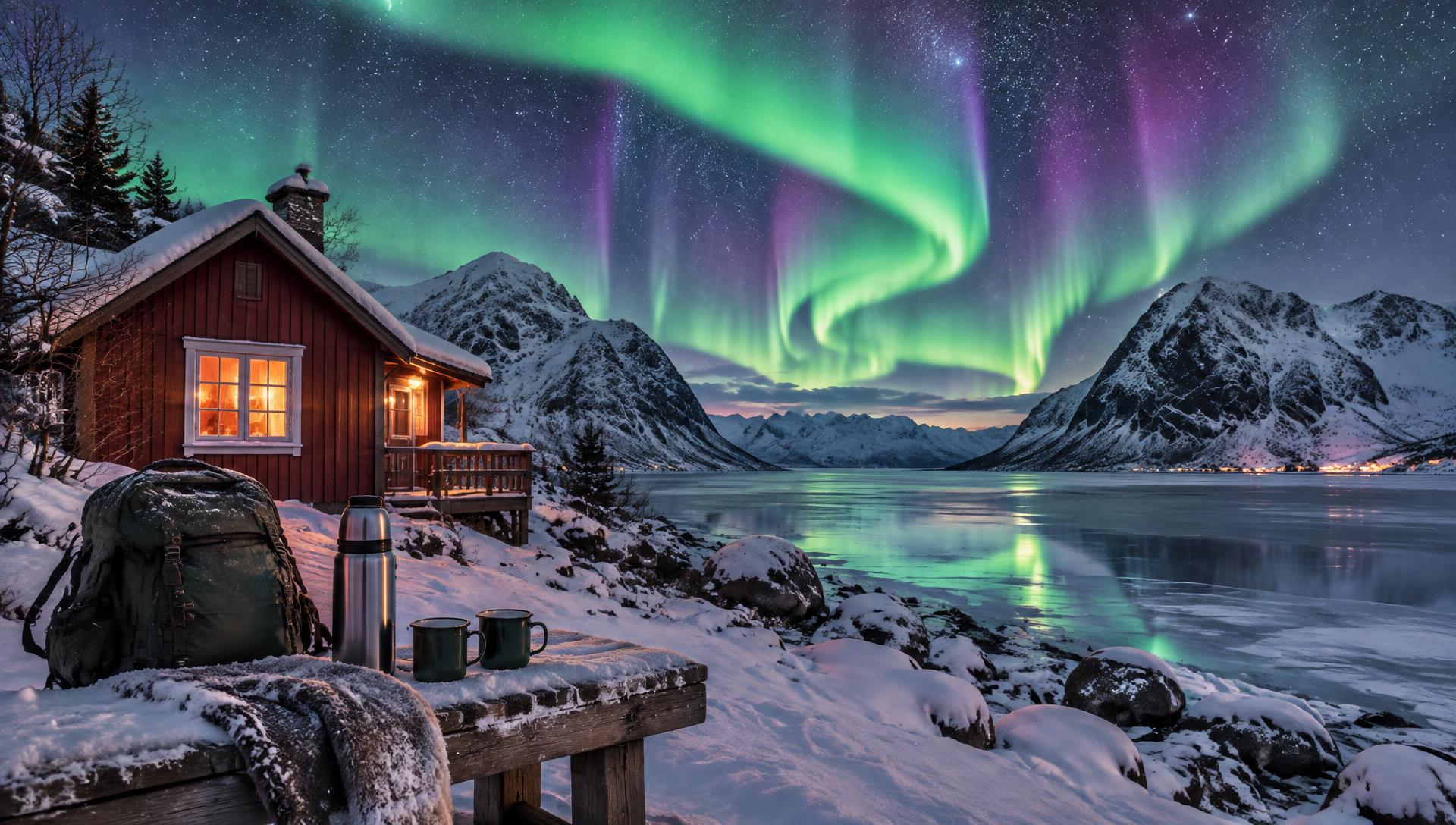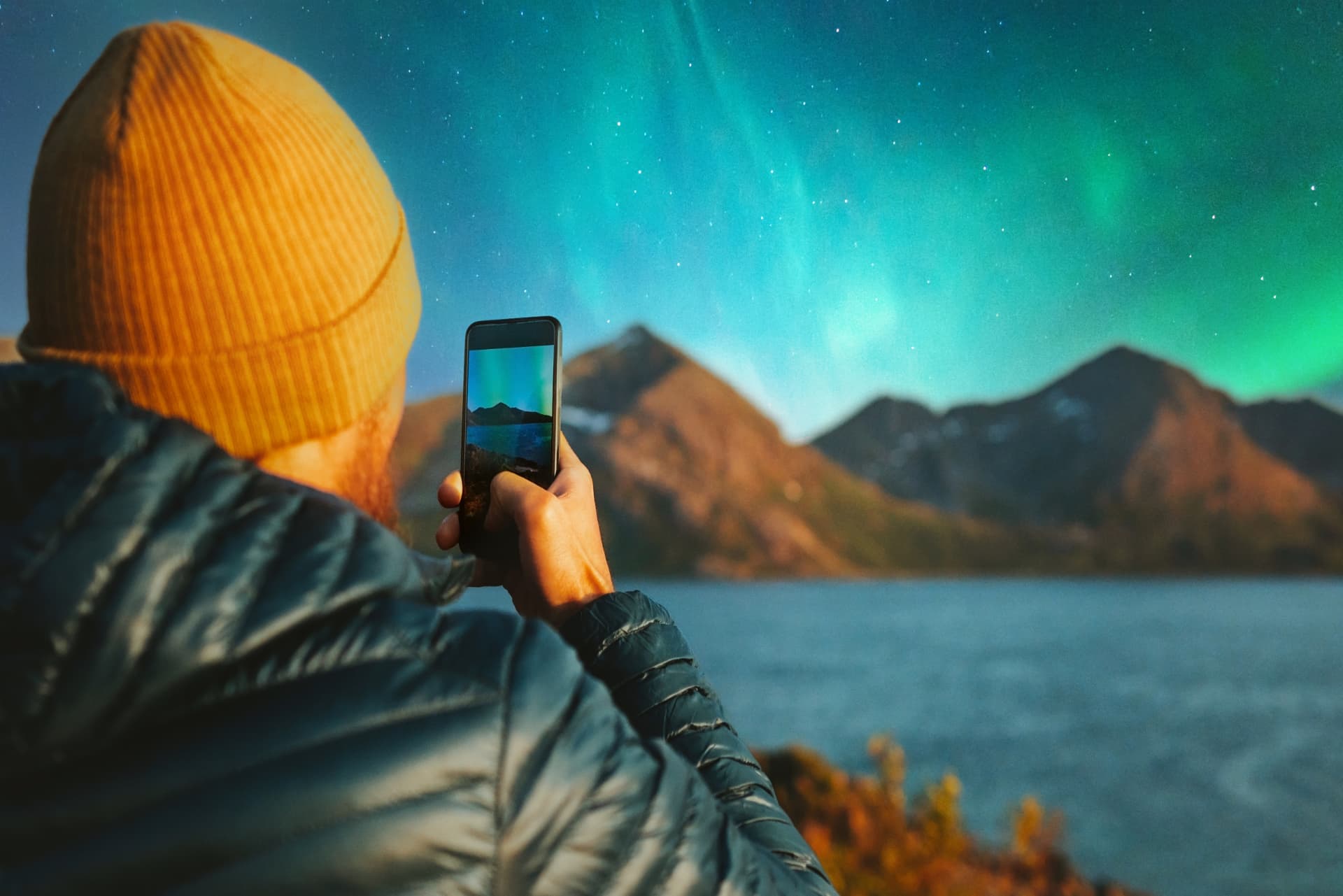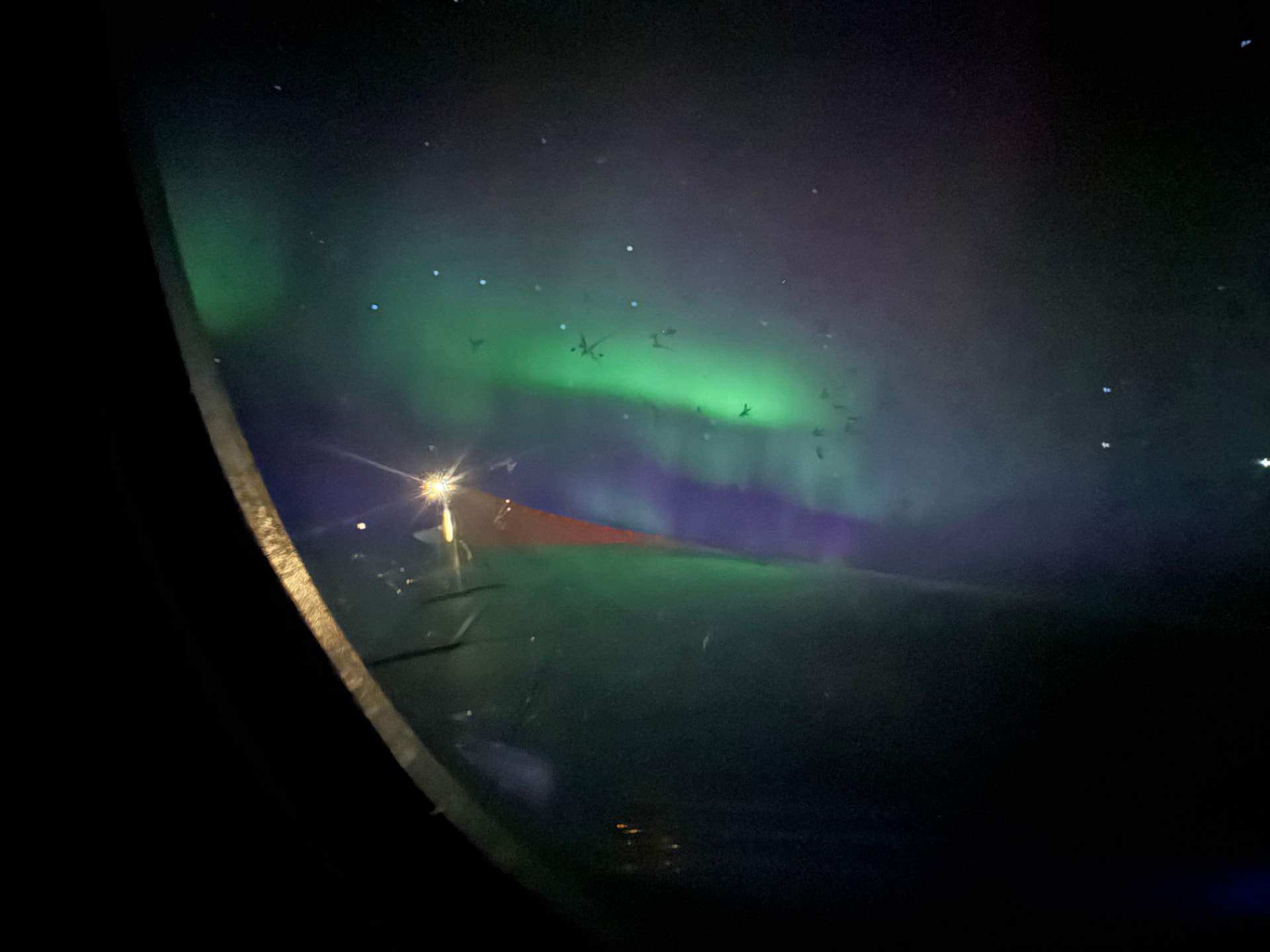
But can you actually see the Northern Lights from a plane?
Yes! You can see the Northern Lights from an airplane, and under the right conditions, the view can be spectacular. Flying above the clouds may even give you an advantage over watching the aurora from the ground.
Whether you're flying to Norway, Iceland, Finland, Alaska, or across the North Atlantic, your journey could include an unforgettable encounter with the aurora borealis.
Here's everything you need to know about seeing the Northern Lights from a plane, including the best flight routes, which window seat to choose, and how to improve your chances.
Can You Really See the Northern Lights From an Airplane?
Absolutely! The Northern Lights occur high above Earth's surface, typically at altitudes of around 80 to several hundred kilometers.
Commercial airplanes generally cruise at approximately 30,000–40,000 feet (9–12 kilometers), far below the altitude where most auroras occur.
This means that when you see the Northern Lights from an airplane, you're usually looking upward or toward the horizon at the glowing aurora.
One of the biggest advantages of flying is that aircraft often travel above lower cloud layers. Since clouds frequently block the Northern Lights for observers on the ground, being above them can provide a clearer view.
However, seeing the aurora from a plane is never guaranteed. You still need the right combination of darkness, geographical location, solar activity, and a suitable view from your window.

Why Seeing the Northern Lights From a Plane Is So Special
Watching the Northern Lights from the ground is already an incredible experience. Seeing them from thousands of feet above Earth offers an entirely different perspective.
Here are three reasons why an airplane can be an amazing place to watch the aurora.
1. You Can Fly Above the Clouds
Cloud cover is one of the biggest challenges when hunting the Northern Lights.
Even when aurora activity is strong, thick clouds can completely hide the display.
An airplane cruising above the clouds may have a clear view of the night sky, allowing passengers to see auroras that would be invisible from the ground.
2. Less Light Pollution
Cities, streetlights, and buildings create light pollution that can make faint auroras difficult to see.
At cruising altitude, aircraft are generally far from ground-based light sources, potentially providing a darker viewing environment.
However, cabin lights and reflections in the airplane windows can still affect visibility.
3. A Unique Perspective
From an airplane, the Northern Lights can appear as glowing curtains stretching across the horizon.
You might see green waves shimmering above distant clouds or colorful auroral structures extending across a large section of the sky.
On particularly active nights, the display can be breathtaking.
And if you're lucky enough to see the Northern Lights alongside the silhouette of an airplane wing, it's a travel memory you'll never forget.
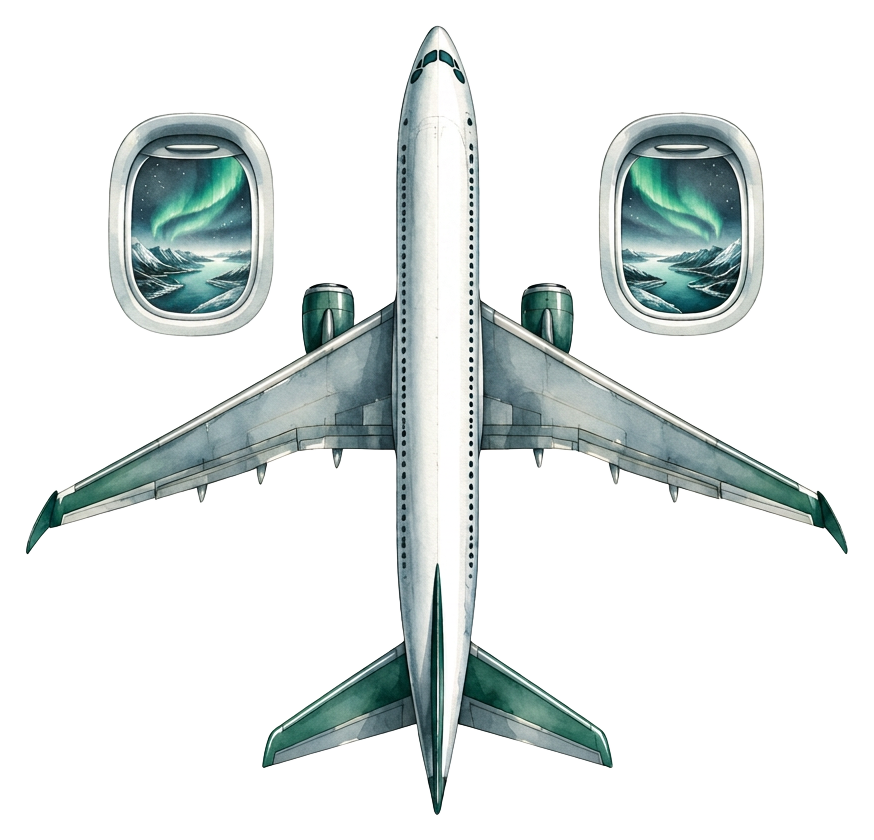
Which Side of the Plane Is Best for Seeing the Northern Lights?
Choosing the right seat can make a big difference.
In the Northern Hemisphere, the aurora is often visible toward the north, particularly when you're flying south of the main auroral zone.
As a general rule, choose a window seat facing north whenever possible.
| Flight direction | Usually best side |
|---|---|
| Flying east | Left side |
| Flying west | Right side |
| Flying north | Depends on the aurora's location |
| Flying south | Depends on the aurora's location |
These are general guidelines rather than guarantees.
If your flight crosses directly beneath the auroral oval, the Northern Lights may appear overhead, to the south, or on either side of the aircraft.
Before choosing your seat, check the planned flight route and compare it with an aurora forecast.
Tip: Try to select a window seat away from the wing if you want an unobstructed view of the night sky.
Best Flight Routes for Seeing the Northern Lights
Some flight routes offer better opportunities to see the Northern Lights because they travel through high northern latitudes.
Here are several regions where passengers may have a chance to spot the aurora.
Flights to Northern Norway
If you've spent some time exploring our website, you've probably noticed that Norway gets quite a lot of attention. And there's a good reason for that!
Norway is one of the world's most popular Northern Lights destinations, with excellent opportunities to see the aurora, particularly in the northern parts of the country.
And the experience might begin before you even land.
Flights connecting Oslo with Tromsø, Alta, or other northern destinations sometimes travel through areas where the aurora is visible.
During dark winter evenings, passengers may spot the Northern Lights from their airplane windows before arriving at their destination.
Flights to Iceland
Iceland's location in the North Atlantic makes it an excellent destination for Northern Lights enthusiasts.
Night flights between Iceland, North America, and Europe can pass through regions where auroral activity is common.
Depending on the route, passengers may see the Northern Lights over the ocean, Greenland, or Iceland.
Flights Between Europe and North America
Certain transatlantic flights follow northern routes that bring them close to Iceland, Greenland, and northeastern Canada.
During periods of strong geomagnetic activity, these flights may provide opportunities to see the aurora.
However, not every transatlantic flight travels far enough north, and flight paths can change depending on weather and operational conditions.
Flights to Alaska and Northern Canada
Alaska and northern Canada are among the world's best regions for observing the aurora borealis.
Night flights involving Fairbanks, Anchorage, and northern Canadian destinations may offer impressive views when conditions are favorable.
If you're traveling to these destinations for a Northern Lights adventure, keep an eye on the sky during your flight.
What Is the Best Time to See the Northern Lights From a Plane?
The most important requirement for seeing the Northern Lights is darkness.
Although auroras can occur throughout the year, they are difficult or impossible to see in daylight.
Best Months
For flights across Arctic and sub-Arctic regions, the most practical aurora-viewing season is generally September through March, when nights are longer.
The darkest winter months provide extended viewing opportunities, while periods around the September and March equinoxes are also associated with favorable geomagnetic conditions.
Best Time of Night
Auroras can appear at any time during darkness, but activity is often strongest around local magnetic midnight.
For travelers, overnight flights and late-evening departures can therefore be particularly interesting.
Keep in mind that local time changes as you travel across time zones.
Can You See the Northern Lights During the Day?
Normally, no.
The aurora can still be active during daylight, but sunlight overwhelms its relatively faint glow.
Even if your aircraft is flying through a region with strong auroral activity, you generally won't be able to see the Northern Lights through the window during daytime.
How to Increase Your Chances of Seeing the Northern Lights From a Plane
While you can't control the aurora, there are several things you can do to improve your chances.
1. Choose a nighttime flight. Darkness is essential, so select a flight that travels through northern regions after sunset.
2. Book a window seat. An aisle seat makes it much harder to watch the sky. Choose the side most likely to face the aurora.
3. Check the aurora forecast. Before departure, look at geomagnetic activity and the predicted location of the auroral oval.
4. Reduce reflections. Cabin lighting can reflect off the airplane window. Wearing dark clothing or carefully shielding reflections with a jacket can help.
5. Give your eyes time to adjust. Avoid looking at bright screens continuously. Your eyes need time to adapt to darkness.
6. Watch throughout the flight. Auroras can appear and disappear unexpectedly, so check the sky occasionally while flying through northern latitudes.
7. Ask the cabin crew politely. Flight attendants may sometimes know whether an aurora has been spotted, although they may be busy and cannot guarantee announcements.
A little preparation can turn an ordinary flight into an unforgettable experience.
That being said, it's still a bit of a gamble.
Even with the best planning, there are things you simply can't control. Weather is one of them. Not only can weather conditions affect your view of the Northern Lights, but they can also influence the flight route itself.
And of course, there's no guarantee that the aurora will be active at the exact moment your plane passes through the right area.
So while it's definitely worth keeping an eye out, we wouldn't recommend planning your entire trip around the possibility of seeing the Northern Lights from a commercial flight.
Can You Photograph the Northern Lights From an Airplane?
Yes, but photographing the aurora through an airplane window can be challenging.
Aircraft windows create reflections, and vibrations or movement can make long-exposure photographs blurry.
Still, modern smartphones and digital cameras can capture impressive images when conditions are favorable.
Tips for Taking Better Aurora Photos From a Plane
- Turn off your camera flash.
- Use Night Mode on your smartphone when appropriate.
- Position your camera close to the window without applying pressure.
- Shield the window from cabin reflections.
- Keep your camera as steady as possible.
- Try shorter exposures if movement causes blur.
- Avoid disturbing other passengers while photographing.
Remember that cameras often capture more color than the human eye can see.
A faint grayish-green glow outside your window may appear much brighter and more colorful in a photograph.
And sometimes, the best thing you can do is simply put your camera away and enjoy the moment.
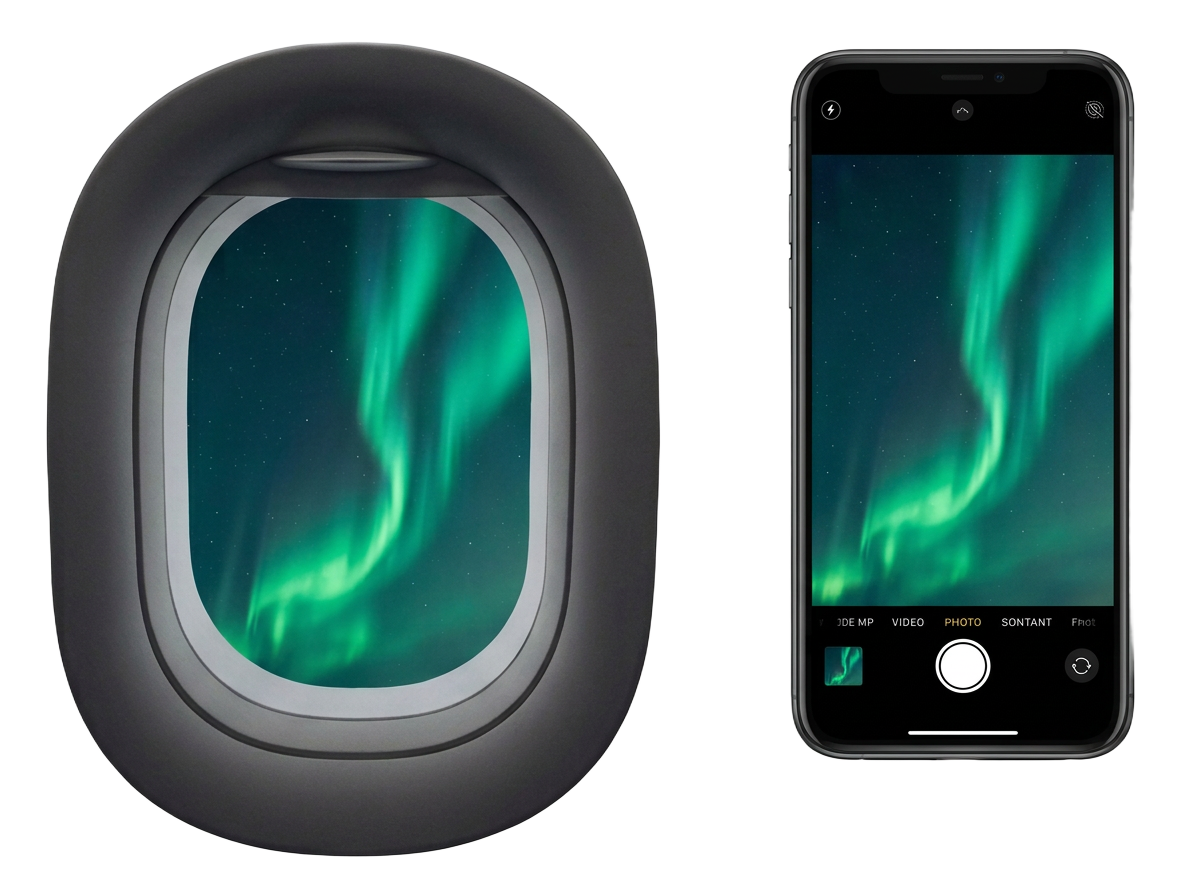
Are the Northern Lights Brighter From a Plane?
They can appear brighter or clearer from an airplane, but not always.
Flying above lower clouds and much of the atmosphere can reduce some of the obstacles that affect ground-based viewing.
However, the brightness you actually perceive depends on several factors, including the intensity of the aurora, cabin lighting, window reflections, and your viewing angle.
A strong aurora viewed from a dark location on the ground can still be far more impressive than a faint display seen through an airplane window.
Can You Book a Private Plane to Chase the Northern Lights?
Yes, it's possible! But it's probably one of the more expensive ways to go Northern Lights hunting.
While most people chase the aurora by car, minibus, or on foot, there are also operators offering dedicated Northern Lights flights.
For example, in Finnish Lapland, private aircraft tours have been offered specifically for passengers hoping to see the aurora from above the clouds.
There have also been dedicated Northern Lights flights from Tromsø in Norway, although some of these services are no longer operating or may not be available for booking.
The biggest challenge with these experiences is that you often need to book your flight well in advance, before you know what the Northern Lights conditions will be like.
And when you're paying a considerable amount of money for a private flight, that's quite a gamble.
Even though flying above the clouds can improve visibility, it doesn't guarantee that the Northern Lights will appear.
What About Northern Lights Helicopter Tours?
Another option worth exploring is a helicopter tour.
In some Arctic destinations, sightseeing operators offer helicopter experiences, and depending on the location and operator, there may be opportunities for evening flights.
A helicopter can provide an incredible aerial perspective, although it's not quite the same experience as watching the Northern Lights from a commercial airplane.
Availability is also limited, and not every helicopter sightseeing operator offers flights specifically for Northern Lights viewing.
If you're considering this option, make sure to check whether the operator actually offers nighttime aurora flights rather than regular daytime sightseeing tours.
And just like with private planes, remember that the Northern Lights are never guaranteed.
Treat Seeing the Northern Lights From a Plane as a Bonus, Not the Main Plan
We know that many visitors traveling to see the Northern Lights want to make the absolute most of their experience.
And we completely understand that!
When you've traveled a long way to see one of nature's most incredible phenomena, it's only natural to want to maximize your chances.
So the idea of seeing the Northern Lights from a plane might sound like the perfect way to make an already special trip even more memorable.
But here's our advice: treat it as a bonus rather than something you should count on.
You can choose the right seat, study the flight route, and check the aurora forecast. But at the end of the day, seeing the Northern Lights from a commercial airplane is largely a matter of luck.
Instead, we'd recommend focusing your time and energy on finding a quality Northern Lights tour operator at your destination.
Experienced guides can follow weather forecasts, search for clearer skies, and take you to locations where you have a better chance of seeing the aurora.
And if your budget allows, you can always consider a dedicated helicopter or private plane experience as something extra.
We've been fortunate enough to experience the Northern Lights both from the air and from the ground. And one thing we can tell you is that seeing them from the ground doesn't feel any less amazing.
In fact, standing outside beneath a sky filled with dancing Northern Lights, watching them move above you, is an experience that's difficult to beat.
So if you happen to catch the aurora from your airplane window, enjoy every second of it.
But if you don't, don't worry. The real adventure might still be waiting for you after you land.
Ready to pick a place?
Every destination page shows tonight's aurora outlook calculated from its own coordinates.
Explore destinations