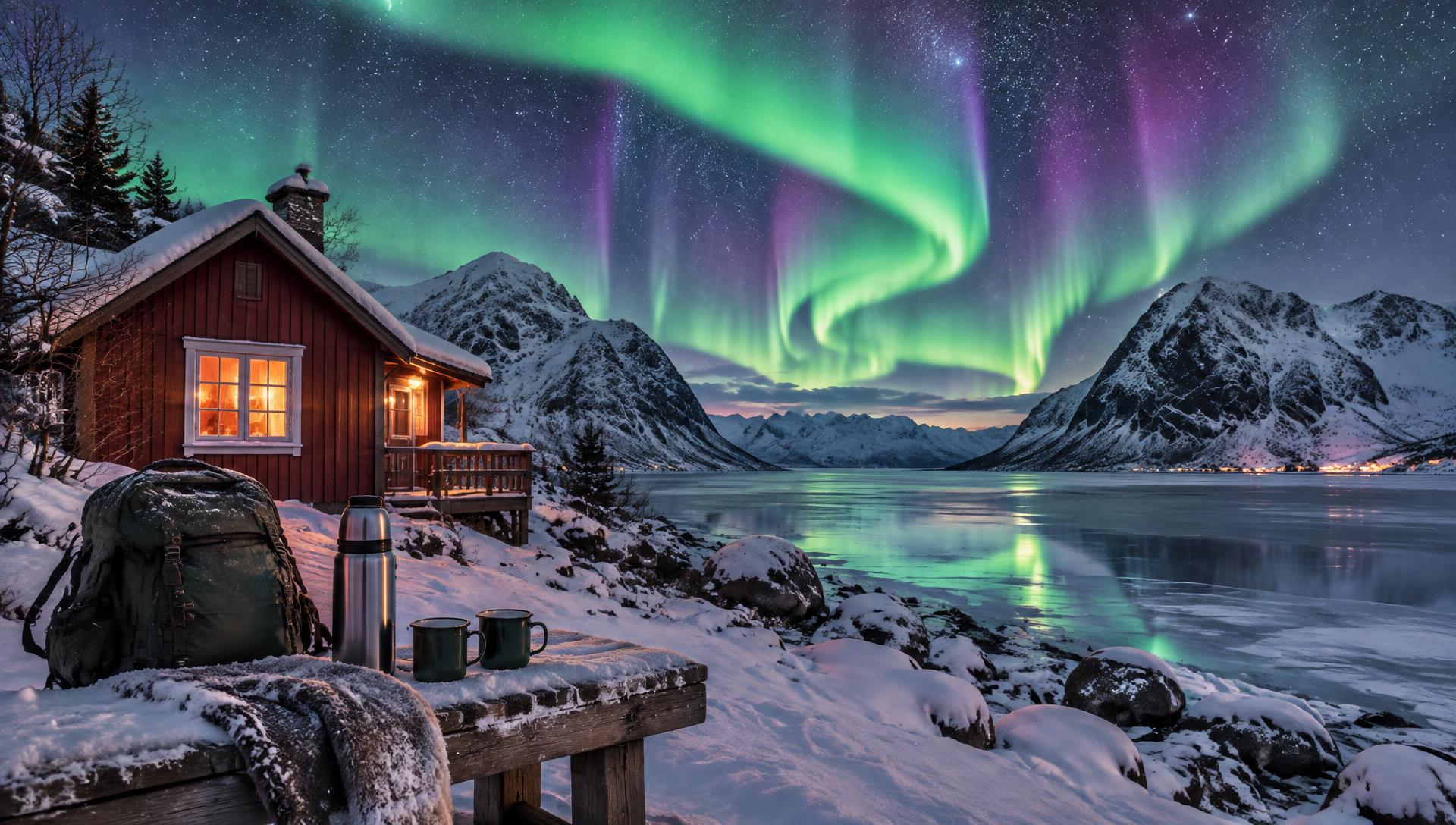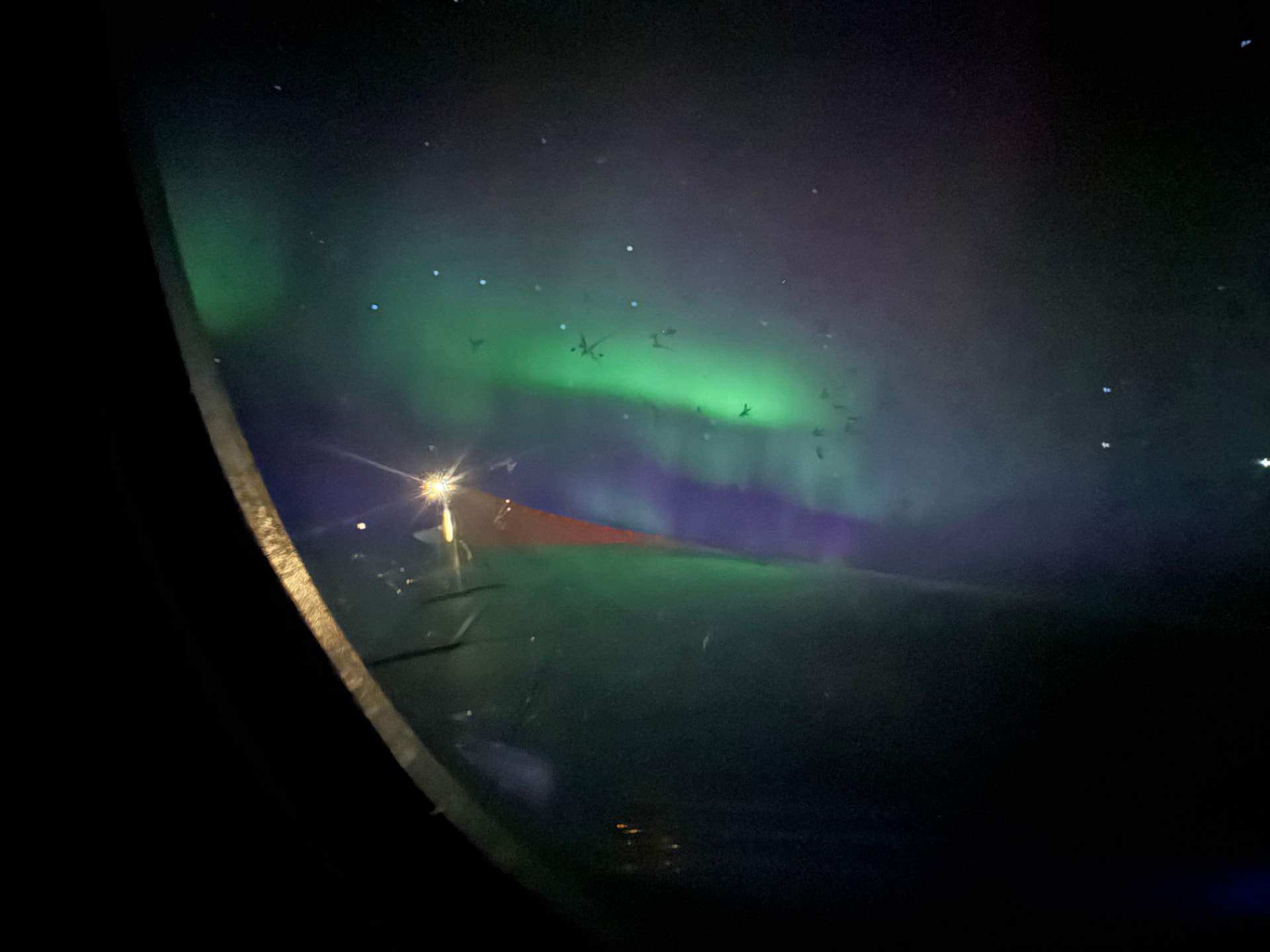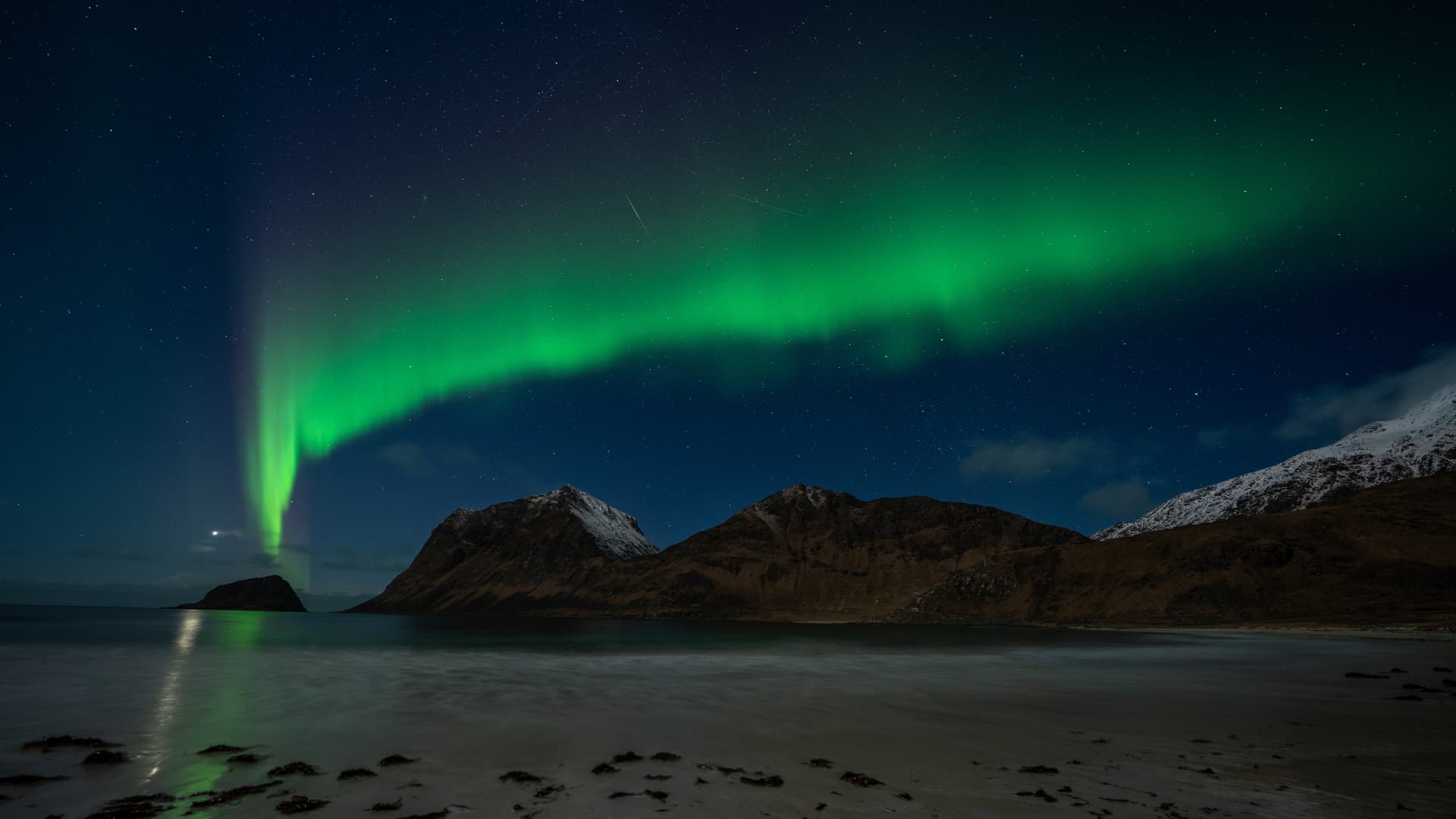
Northern Lights season: September to March
The viewing season starts when dark nights return in late summer and early autumn. It continues through winter and into early spring.
Here's what you can expect at different times of the season.
September and October
September and October are good months if you want to avoid the coldest part of winter.
Dark nights have returned across the north, but daytime temperatures are generally milder than they are in January or February. Early in the season, there may be little or no snow at lower elevations.
This can work well for road trips and hiking, particularly in September.
November and December
By November, the nights are long.
Above the Arctic Circle, daylight becomes very limited as winter approaches. Some northern destinations enter the polar night, when the sun does not rise above the horizon.
Snow is also more likely, although conditions vary from year to year and between coastal and inland areas.
December is a popular time for travelers who want the Northern Lights as part of a winter trip, rather than as the only reason for visiting.
January and February
January and February bring long nights and winter conditions across most northern aurora destinations.
There's usually plenty of time for Northern Lights watching after dark, while activities such as dog sledding, skiing, snowmobiling and reindeer experiences are in full swing.
It can also be very cold, especially in inland areas of Sweden, Finland and Norway.
March
March is a particularly practical month for an aurora trip.
Nights are still dark enough to see the Northern Lights, but there is much more daylight than in December or January. Snow usually remains across northern destinations, so winter activities are still available.
For travelers who want both daytime activities and Northern Lights at night, March is worth considering.
Can you see the Northern Lights in April?
Yes, particularly early in the month, but the nights become shorter quickly.
The farther north you travel, the sooner increasing daylight becomes a problem. By late April, many Arctic destinations no longer have enough darkness for reliable aurora viewing.
Can you see the Northern Lights in summer?
Not in the main Nordic aurora destinations.
The Northern Lights can still occur, but the sky is simply too bright to see them.
Northern parts of Norway, Sweden and Finland experience the Midnight Sun around summer. Iceland doesn't have the Midnight Sun in quite the same way, but its summer nights are also very bright.
If seeing the aurora is the main reason for your trip, avoid summer.
What is the best time of night to see the Northern Lights?
There is no fixed time.
You will often see 10 PM to 2 AM suggested as the best window. It's a reasonable period to be outside looking, but the Northern Lights don't follow a timetable.
In Tromsø, for example, you might see an active aurora at 7 PM. Another night, nothing much may happen until after midnight.
If it's dark, the sky is clear and conditions look promising, start looking. There is no reason to wait for a particular hour.
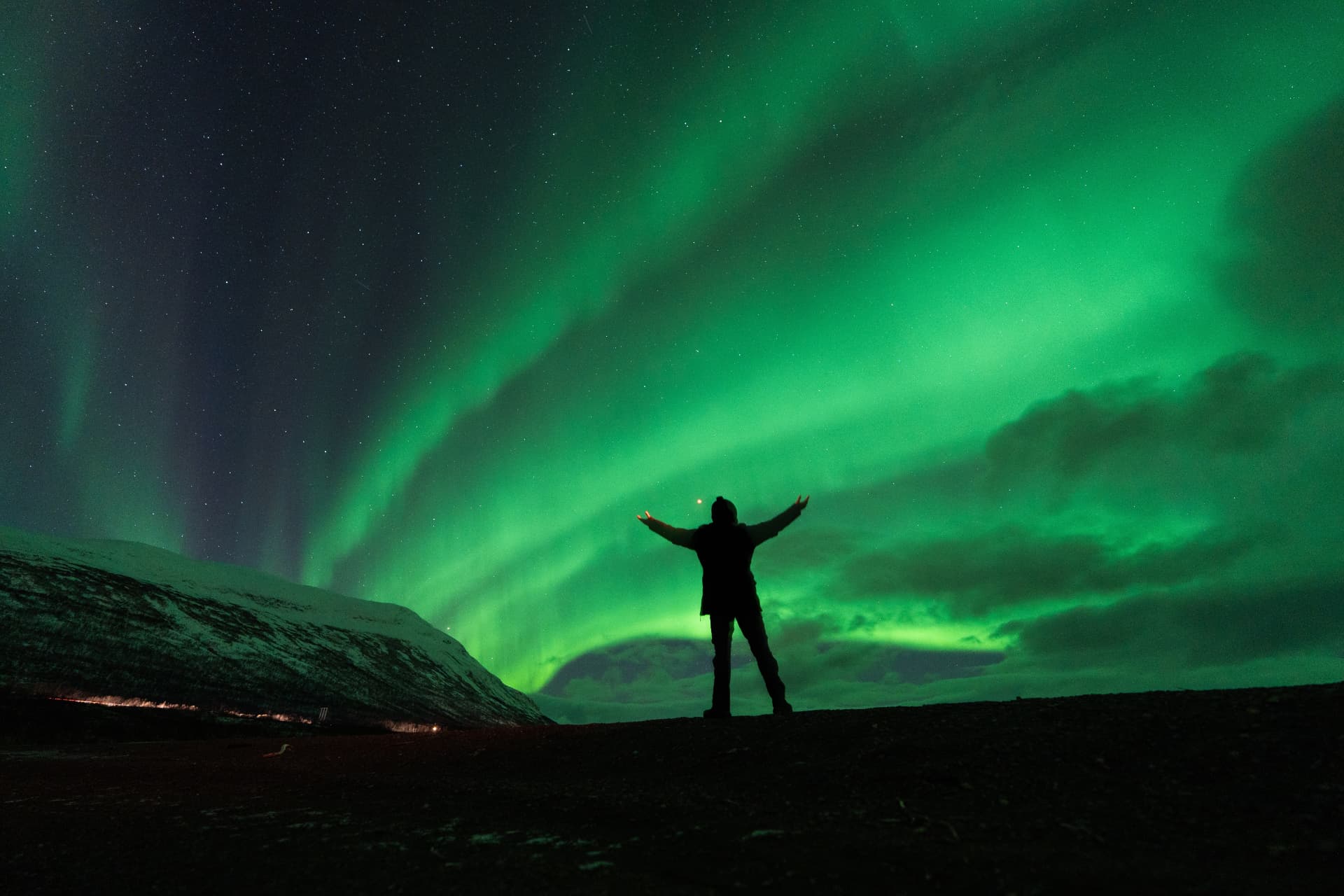
How important are clear skies?
Very.
Clouds can ruin an otherwise excellent Northern Lights night. The aurora may be active above you, but you won't see it through thick cloud.
When checking conditions, look at both the aurora forecast and the local weather forecast.
Pay particular attention to cloud cover.
This is also why Northern Lights guides sometimes drive a long way during a tour. Finding a patch of clear sky can make more difference than moving to an area with slightly stronger predicted aurora activity.
You can learn more in our guide to Northern Lights forecasts.
Do you need a high KP index?
No, especially if you're already far north.
The KP index measures geomagnetic activity on a global scale. A high number can indicate that aurora may be visible farther south than usual, but you don't need a geomagnetic storm to see the Northern Lights in places such as Tromsø or Abisko.
These destinations are close to the normal auroral zone.
So don't cancel your evening because an app shows a low KP number.
Our guide to the KP index explains what the number means and when it's actually useful.
Does light pollution matter?
Yes, but you don't always need complete wilderness.
A strong aurora can be visible from a town or city. A weaker display is easier to see from somewhere dark.
Streetlights also affect your eyes' ability to adjust to the darkness, so moving away from bright buildings and roads usually gives you a better view.
If possible, find somewhere with a clear view of the sky and limited artificial light.
How many nights should you plan for?
More than one.
Nobody can guarantee the Northern Lights on a particular night. Cloud cover alone can wipe out an evening of viewing.
If seeing the aurora is important to you, staying three to five nights gives you several opportunities for the weather and aurora activity to line up.
That doesn't guarantee anything, but it's much better than arriving for one night and hoping for perfect conditions.
Which month should you choose?
There isn't a single best month for everyone.
Choose based on what else you want from the trip.
September and October are good for milder temperatures and autumn landscapes.
December to February offer long nights, snow and the full Arctic winter experience.
March gives you dark nights, snow and considerably more daylight for exploring during the day.
For most Northern Lights trips to Norway, Sweden, Finland or Iceland, any time from September through March can work.
Once you've chosen the season, your destination and the weather will matter more than finding the supposedly perfect date.
If you're still deciding where to travel, see our guide to the best places to see the Northern Lights.
Ready to pick a place?
Every destination page shows tonight's aurora outlook calculated from its own coordinates.
Explore destinations