A different kind of aurora
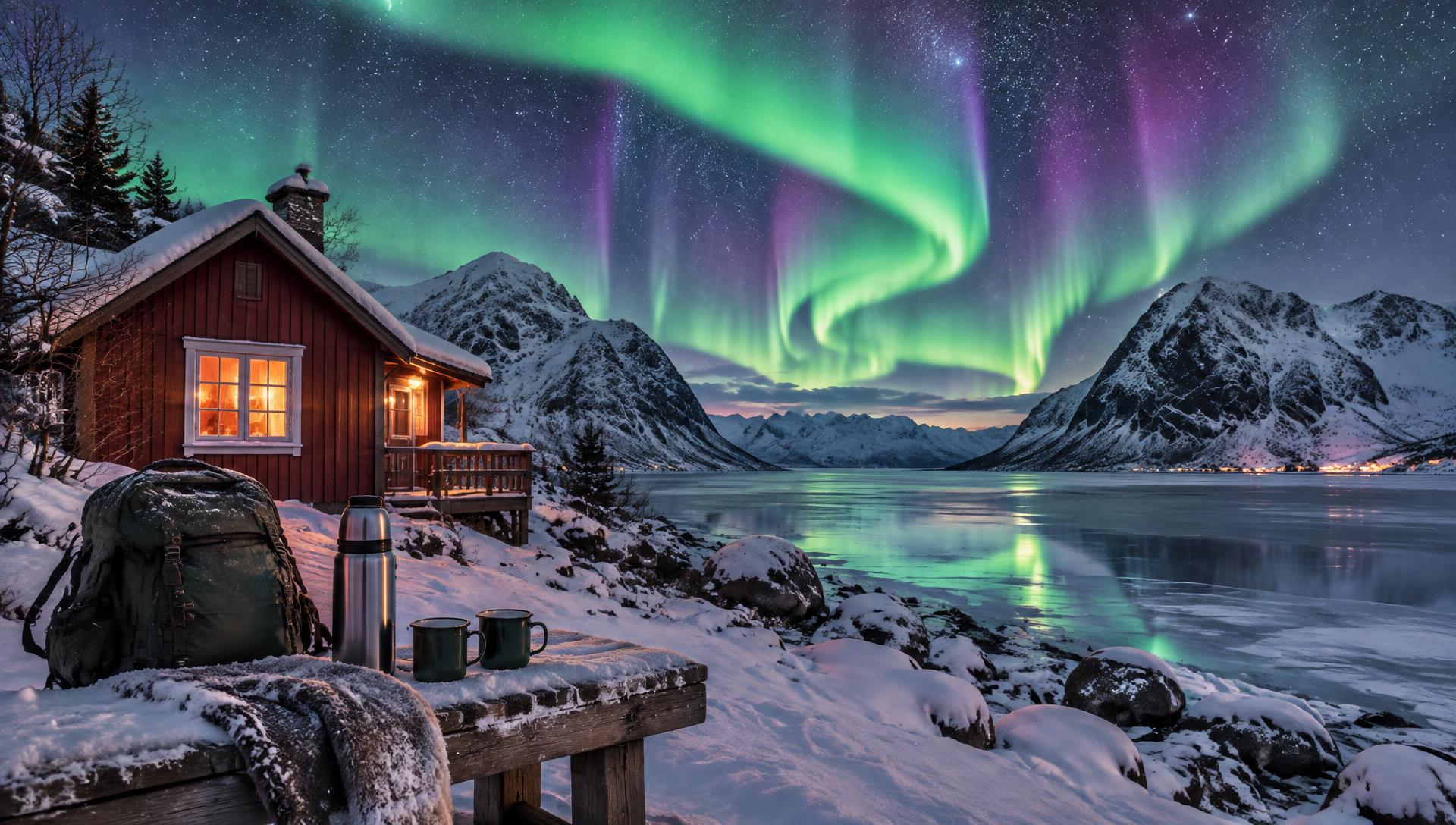
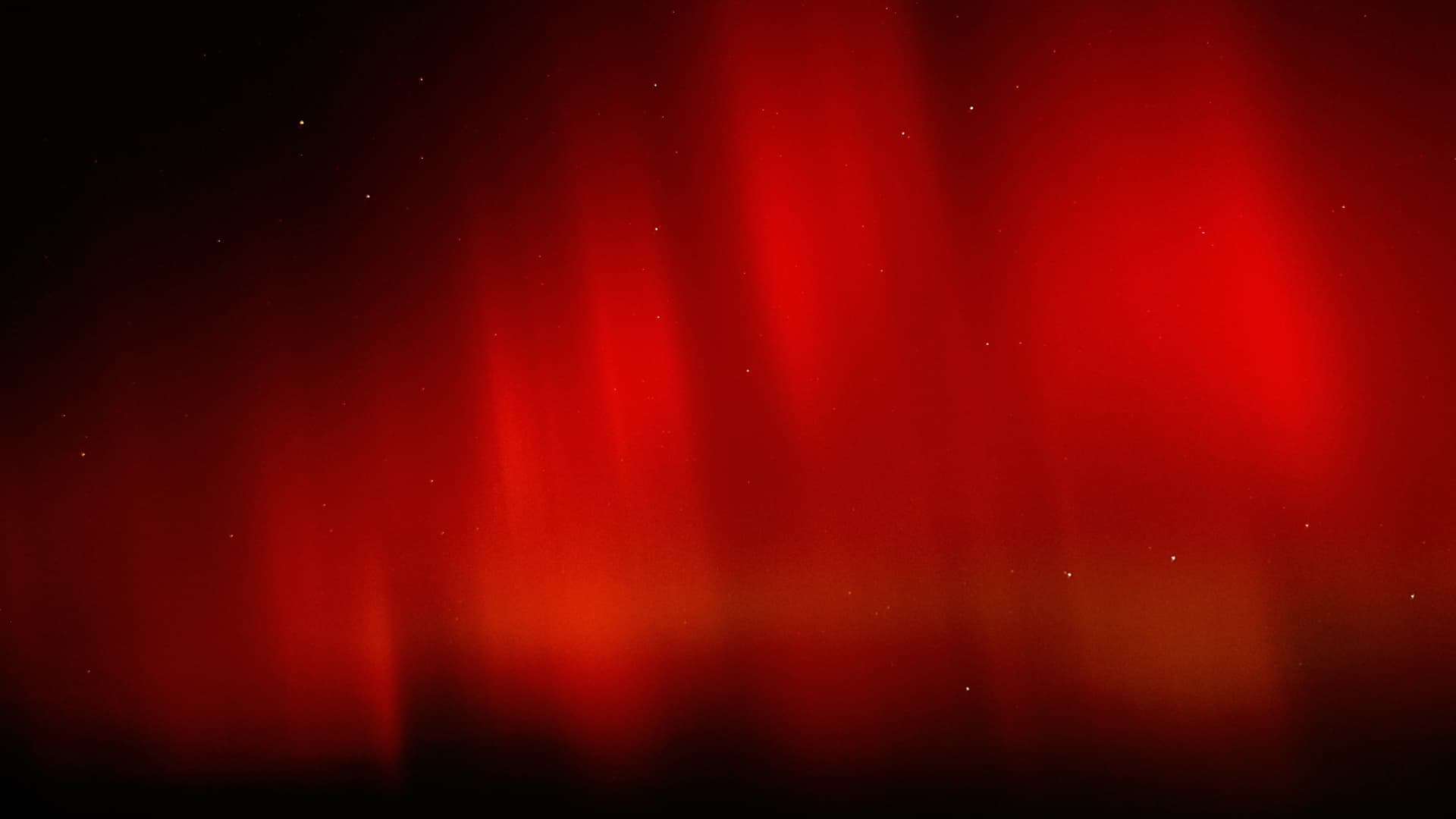
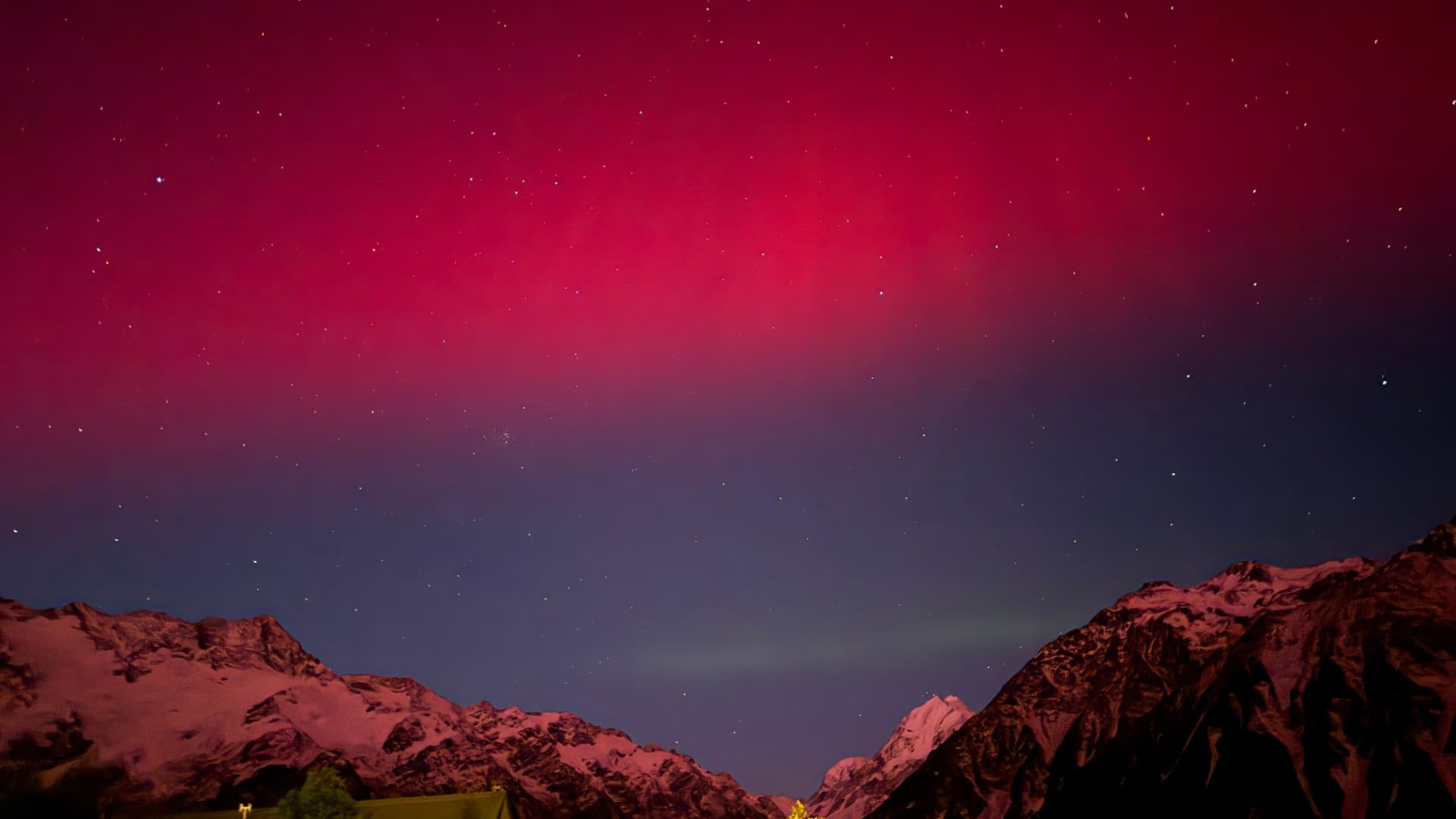
A strong red aurora looks quite different from the classic green curtains you might associate with northern Norway or Iceland. It can appear as a dark red glow on the horizon, long crimson pillars or, during exceptional displays, a sky filled with red and pink.
So why does it happen?
Why does the aurora turn red?
Auroras are produced when charged particles interact with gases in Earth's upper atmosphere, causing them to release energy as light. Which color we see depends partly on the gas involved and where in the atmosphere this happens.
Both green and red auroras are commonly produced by atomic oxygen.
The familiar green light usually comes from oxygen at altitudes of roughly 100–150 kilometers. Red oxygen emissions occur much higher up, often above 200 kilometers, where the atmosphere is considerably thinner. One of the characteristic red auroral emissions is at a wavelength of around 630 nanometers.
This difference in altitude is why you can sometimes see brilliant green curtains topped with red. You're seeing emissions from different heights in the atmosphere at the same time.
Nitrogen can add blue, violet and reddish-purple tones to the display as well.
It's part of what makes chasing the Northern Lights so addictive: no two nights are quite the same. Spend four nights looking for the aurora and you could have four completely different experiences. One night might give you a quiet green arc. The next could bring fast-moving curtains, pillars and colors you weren't expecting.
Why can red Northern Lights appear so far south?
Some of the most striking red auroras are seen in places that rarely experience the Northern Lights.
During a major geomagnetic storm, the auroral oval can expand much farther toward the equator than usual. This can make the aurora visible hundreds or even thousands of kilometers beyond the regions where it's normally seen.
The altitude of red aurora matters too.
Because red emissions occur so high above Earth, they can be visible from a considerable distance. Someone farther south may only see the high red portion of an aurora near the northern horizon, while observers farther north are standing beneath a display dominated by green.
So if people farther south report a red sky while observers farther north are sharing photographs of green Northern Lights, the reports don't necessarily contradict each other. They may simply be seeing different parts of the same auroral activity.
Can you predict when the Northern Lights will be red?
Not with the usual aurora forecasts.
Most forecasts tell you where auroral activity is expected and how strong it may be. They don't normally predict what color the Northern Lights will appear from your location.
There's an easy mistake to make here. Many aurora forecast maps use green, yellow and red to represent increasing levels of activity or probability. A red area on the map does not mean the aurora itself is forecast to be red.
Strong geomagnetic activity can make prominent red aurora more likely, particularly when the auroral oval expands unusually far south. But even a very high Kp index isn't a ‘red aurora alert.’
Kp tells you about geomagnetic activity, not the color of the sky.
The actual color depends on the particles entering the atmosphere, their energy, the gases they interact with and the altitude of those interactions. A forecast might tell you that an exceptional night is possible without telling you whether the sky will be green, red, purple — or a mixture of all three.
Can you see red Northern Lights with the naked eye?
Absolutely, if they're bright enough.
The complication is that your camera and your eyes don't see a dark sky in quite the same way.
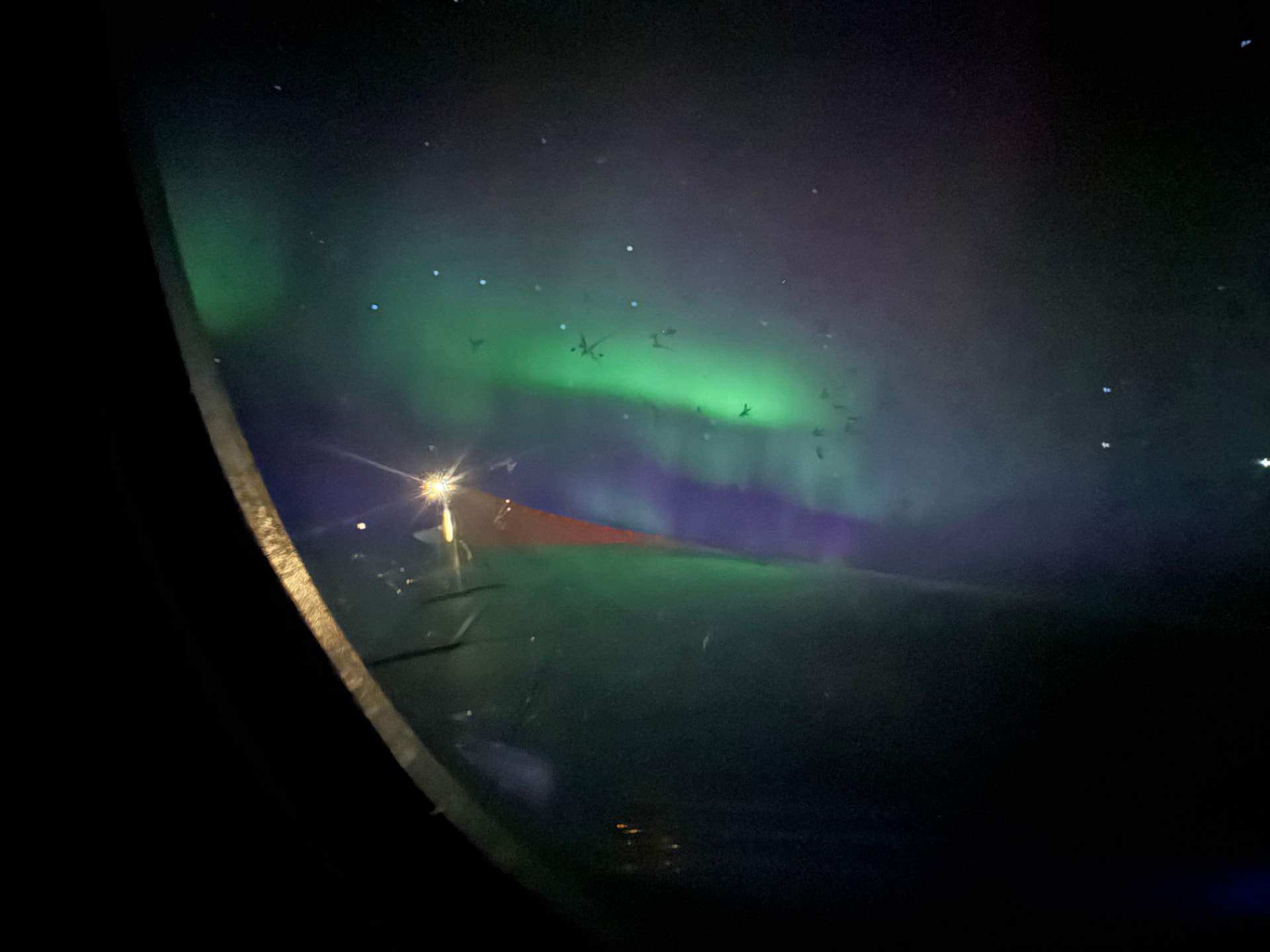
Modern cameras and phones are extremely good at collecting light. Night mode can expose an image for several seconds and reveal reds, pinks and greens that looked much weaker — or weren't obvious at all — to your eyes.
This is why aurora photos sometimes look considerably more colorful than the experience did in person. It doesn't necessarily mean the colors have been added afterwards.
A strong red aurora is a different story. When the display is bright enough, the red can be unmistakable to the naked eye and may cover a surprisingly large area of the sky.
If you see a strange glow and aren't sure whether it's aurora, take a picture. Your camera can be a useful way of confirming the color.
Just don't spend the rest of the light show looking at the screen.
How rare are red Northern Lights?
A strongly red aurora is much less commonly seen than the familiar green Northern Lights.
That doesn't mean red emissions are completely absent whenever an aurora looks green. Sometimes they're simply too faint for your eyes to pick up, while a camera may reveal them clearly.
The memorable displays are the nights when red becomes an obvious part of the show.
In places such as northern Norway, Iceland, Sweden, Finland, Alaska and Canada, you may see red sitting above green curtains or mixed into an active display. During a major geomagnetic storm, the experience can be very different farther south, where the high red portion may be the easiest part of the aurora to see.
And that's one reason it's worth looking north during unusually strong geomagnetic activity, even if you live outside the usual auroral zone.
If the sky has a strange reddish glow, take a photo and see what the camera finds.
Then put it away and keep watching.
Ready to pick a place?
Every destination page shows tonight's aurora outlook calculated from its own coordinates.
Explore destinations